
Catalogue without a photoshoot: how boutiques create product images with AI
By The VastraHQ Team · Updated
You can build a full product catalogue from one photo of the garment: upload it, choose a model and a setting, and VastraHQ generates the model shots, the catalogue angles and a reel. No studio booking, no model call sheet, and no waiting on an editor before you can list the piece.
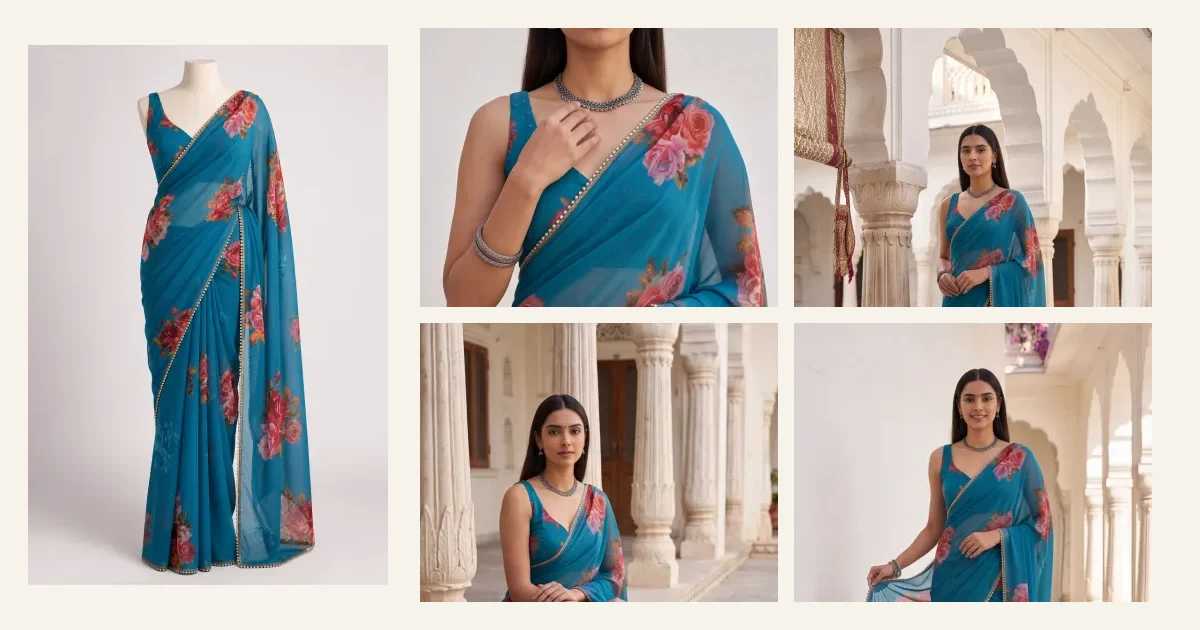
Most boutique owners in India know the bottleneck without needing it explained. The pieces arrive, they look beautiful on the rack, and then they sit there — because listing them means a shoot, and a shoot means a studio, a model, a photographer, a date everyone can agree on, and a week of editing afterwards. By the time the images land, the season has moved on.
An AI catalogue removes the shoot from that sequence. You photograph the garment itself — flat, on a hanger, or on a mannequin — and the model shots and catalogue angles are generated from that one photo. This guide walks through what that actually looks like in practice: what to photograph, what you get back, where those images go, and what it does not replace.
What "a catalogue without a photoshoot" actually means
It means the garment is the only thing that has to be physically present. Everything that usually surrounds a shoot — booking a studio, casting a model, hair and make-up, a draping assistant, the photographer, the editing queue — is replaced by choices you make on a screen in a few minutes.
What you get back is the set a listing actually needs: your piece shown on a model, and the catalogue angles a buyer scrolls through before she decides. The hero image at the top of this page is exactly that — one saree photographed on a mannequin, and the four catalogue images generated from it.
What you need before you start
Almost nothing, which is the point. One good photo of the garment does most of the work, and a phone camera is enough if the light is on your side.
- The whole garment in frame — hem to shoulder, nothing cropped out of the picture.
- Even, natural light. Beside a window in the morning beats a tube light overhead.
- A plain background where you can manage it. A bedsheet on a table is fine.
- The work visible — zari, border, print or embroidery not folded under or hidden by a hanger clip.
- The true colour. If the photo reads far bluer or warmer than the piece in your hand, retake it in different light.
That last point earns the most attention for the least effort. Colour is the single thing a buyer complains about most often when a piece arrives, so the closer your source photo sits to the real fabric, the less you will find yourself explaining afterwards.
The angles a listing actually needs
A shopper deciding on an ethnic piece is answering specific questions, and each one has an image that answers it. A catalogue set is built around those questions rather than around a number of photos.
| Angle | The question it answers |
|---|---|
| Front, full length | What is this piece, and how does it fall? |
| Close detail | What does the fabric and the work look like up close? |
| Border or pallu | Is the zari or the border worth the price? |
| Back | What does the blouse, the tie or the finish look like? |
The back is the one most often skipped, and the one that quietly costs sales on blouses and cholis. If a buyer cannot see the back, she assumes the worst about it.
Where these images go
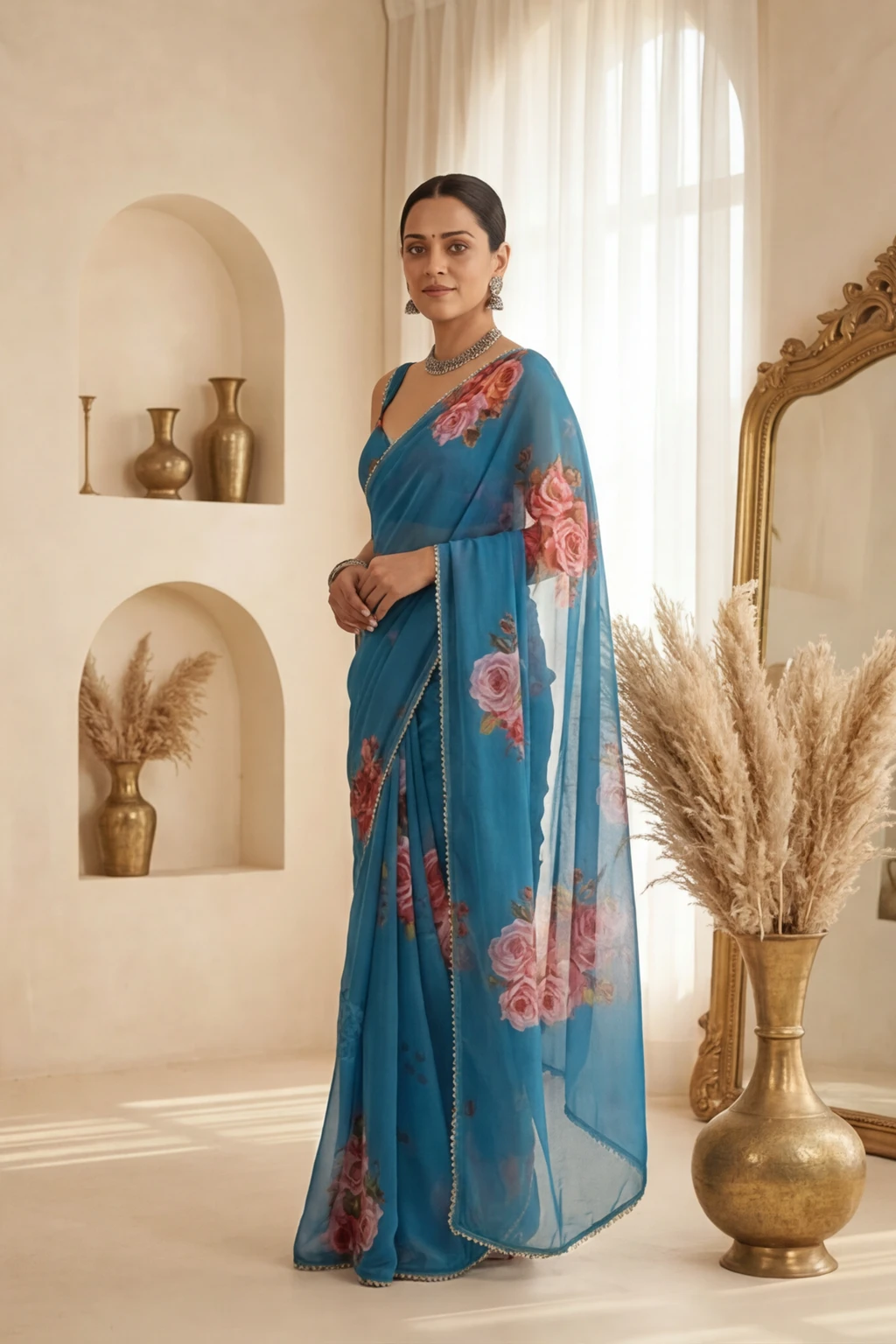
The images come back as ordinary files, so they go wherever you already list. In practice that is four places for most boutiques.
- Your Instagram feed and stories, where the model shots do most of the selling.
- A WhatsApp catalogue, which is still where a great many Indian boutiques actually close the sale.
- Marketplace listings — check each marketplace’s own rules, since some ask for a particular background or aspect ratio.
- Your own website or storefront, where the full angle set replaces a single hopeful photo.
A reel comes out of the same upload, which matters more than it used to: a still image and a short vertical video reach different people on the same platform, and making the second one used to mean a separate shoot day.
What this does not replace
Worth being straight about, because the honest boundary is what makes the rest trustworthy.
- A campaign with a specific face. If the point is a named model or an ambassador your customers recognise, that is a shoot.
- A styled editorial story built around a location, a mood and a stylist. Generated images serve the listing, not the art direction.
- Your judgement about the piece. You still choose which garments deserve the push, and what to say about them.
- A photo of a garment you do not have yet. The piece has to exist and be photographed.
For the everyday work — the forty pieces that arrived this month and need to be listed before the festive rush — the shoot was never the interesting part. That is the part worth removing.
What it costs, and where to look next
A traditional shoot in India carries studio, model, glam, photographer and editing costs, and we have broken those numbers down separately in the cost of a fashion photoshoot in India. VastraHQ works on credits instead, charged per image and per second of video, with the current rates on the pricing page.
And if the reel matters as much as the images — most boutiques find it does on Instagram — the same upload produces one. AI reels for Indian ethnic wear shows what those look like across five garment types.
Frequently asked questions
- Can I make a product catalogue without a photoshoot?
- Yes. An AI catalogue is built from a photo of the garment itself, so there is no studio, model or shoot day involved. You upload the piece, choose how it should be shown, and the model shots and catalogue angles are generated for you.
- What kind of garment photo do I need to start?
- One clear, well-lit photo of the piece — flat on a table, on a hanger, or on a mannequin. Daylight near a window works well. The whole garment should be in frame, with the fabric and border visible and nothing covering the work.
- How many images do I get for one garment?
- A catalogue set covers the angles a listing needs — the front, a close detail, the border or work, and the back — alongside the model shots. You can generate more angles for the same garment whenever a marketplace asks for them.
- Can I use these images on Meesho, Amazon or my own website?
- Yes. The images come out as standard files you can upload anywhere you list — your own site, a marketplace listing, WhatsApp catalogues or Instagram. Check each marketplace’s own image rules, since some ask for a specific background or aspect ratio.